On 5 June, The MJ reported the release of the National Audit Office's (NAO) report, Managing PFI assets and services as contracts end which was supported by analysis from the Infrastructure and Projects Authority and Local Partnerships.
The end of a PFI contract may seem a long way into the future. However, in the first part of this decade over 50 operational PFI contracts will expire. This number rises to around 200 contracts over the next 10 years.
Dealing with contract expiry can be resource-intensive and will certainly require more support than is currently being provided to the project. A key risk is the increased cost of delivery and potential disruption to services if adequate and appropriate preparation are not put in place well in advance of contract expiry. Issues such as whether services, e.g. maintenance and cleaning, are provided in-house, by a new contractor or through a new contractual relationship with the existing provider must be addressed. If the facility or assets do not revert upon contract expiry, then a decision will be needed as to whether to continue to use them and, if so, what negotiations need to take place.
It is important to understand the timeline to expiry within each contract. A number of the earlier PFI contracts do not specify a timeline at all. Others simply refer to "surveys on expiry", to be commenced two to three years before the expiry date. Infrastructure and Projects Authority guidance suggests starting to prepare seven years from the expiry date. Such preparation should form part of a mid-term contract review, allowing for challenge to the way the contract is currently managed. It will also help the public authority identify any issues which require maintenance to achieve the required standard and what is required from an expiry process.
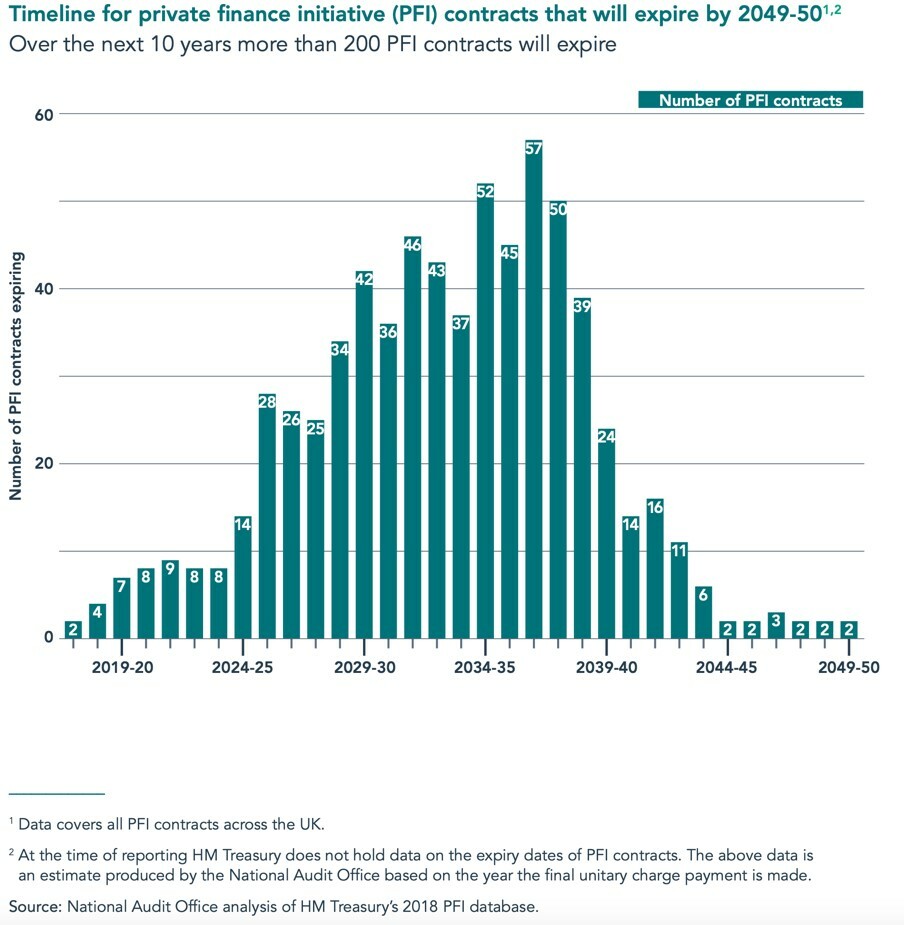
Any contract should consider three concurrent workstreams:
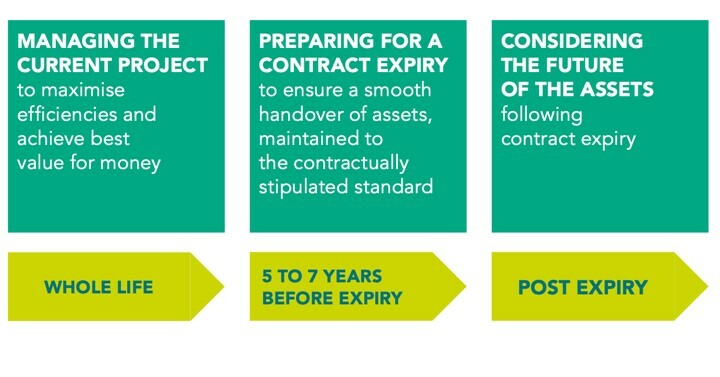
Even the best providers and authorities with excellent relationships will be confronted by a myriad of issues that will need to be addressed through the process. The resolution and timing of tackling these issues will require careful project planning.
The National Audit Office report surveyed 107 PFI contracts of which 89 were still operational and 18 had expired. The report draws out challenges and best practice. This is a timely report and can be used to raise the profile of this issue within public authorities.
Three key considerations the report highlights are:
- only a third of respondents thought that the role and obligations of different parties at expiry were clearly defined
- 55% of survey respondents recognised that they weren't certain about the condition of the assets
- 33% of survey respondents considered that disputes near contract end are likely, with 86% of disputes expected to relate to the quantity of rectification work
Contract expiry should be considered at an early stage – ideally well in advance of the contractual provisions – whilst maintaining a good level of control over current project delivery. Plans for an orderly handover should be developed and a strategy put in place for what happens next, to ensure that contract expiry can be a success.
To achieve this, we believe that there are specific activities that you should undertake, each forming part of the three workstreams.
- Local Partnerships is a joint venture between the Local Government Association, HM Treasury and the Welsh Government. We provide support to central and local government in resolving contractual and operational issues with PPP and PFI contracts. We contributed to the NAO's report on managing PFI assets and services as contracts end. To coincide with its launch we have produced guidance, available on our website, to support our public sector colleagues considering the expiry of PFI contracts.
Rosie Pearson is corporate director at Local Partnerships