Ahead of the much anticipated, or perhaps less so these days, local recovery and devolution White Paper, the question of the purpose of local government should remain central to the future thinking of the sector.
So I offer this foresight to our sector at a time when much of what we know is changing, and what we think we understand is being rewritten and where no actual ‘blueprint' exists for the future of local government.
The first observation and message is: take a breath, stop being overly concerned about our structural definitions and how we are or should be configured. We are missing the point. Form follows function and this is the law. So why are we here?
Surely, this is a straightforward reminder to us of what matters, that is, to influence and provide change the lives of our residents for the better. Structural reform solves nothing, not in itself or of itself but can create a significant distraction from the core purpose of local government.
Local government serves a two-fold purpose. The first is the administrative – supplying goods and services; the second is to represent and involve citizens in determining specific local public needs and how these local needs can be met.
However, this definition focuses on roles and responsibilities rather than real purpose. To define real purpose we should talk the language of outcomes for our communities. Through this focus on outcomes we map out a journey which starts with the question: ‘What are we trying to achieve'? and works back towards questioning our structure, rather than the question of how are we organised.
How we support our communities to live an improved quality of life is influenced and determined by our collective – local government and all its fundamental partnerships – ability to deliver measurable improvements in the seven Quality of Life Outcomes.
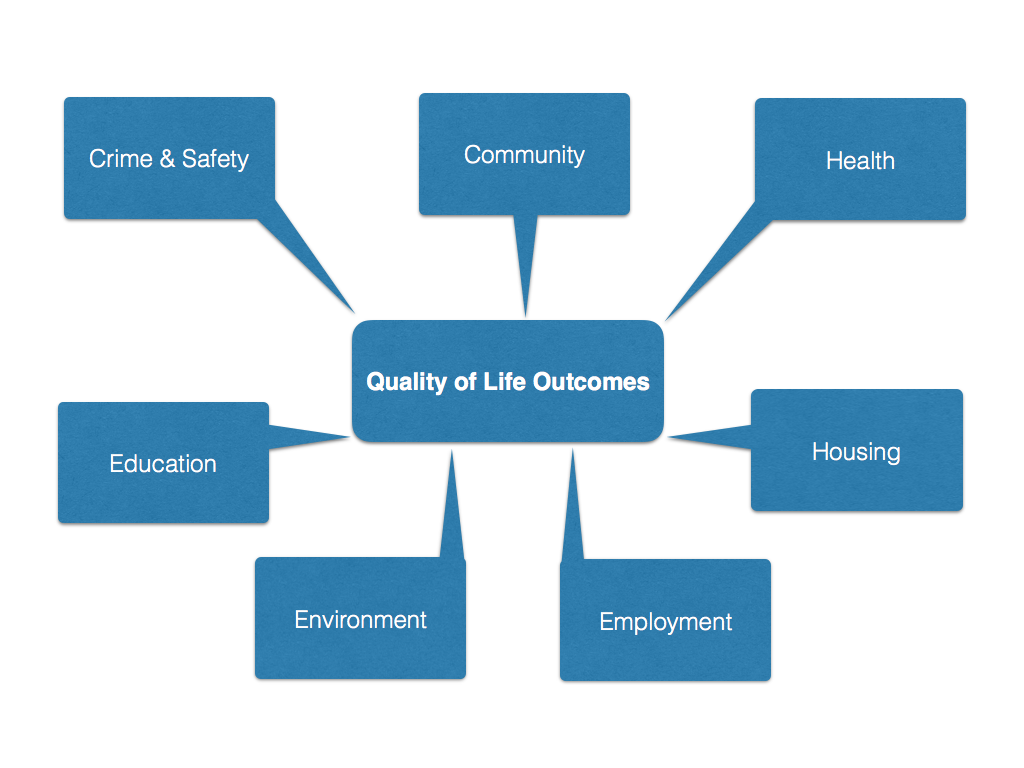
Ultimately, through my experiences in the many structural configurations of local government services, I have come to the conclusion these organisations, regardless of their structural definitions, have two primary outcomes roles: place-shapers and life- enablers, where success for our communities is commonly achieved beyond the confines or imposed restrictions of our local government service definitions and roles and responsibilities and indeed beyond the structural configurations themselves.
As place-shapers, and if we are bold and ambitious, we shape the vision for place, determine the prosperity of our place and influence the pace of change for our place.
As life-enablers, and if we are truly connected to our communities, we can enable lives, ensure our young people have the best start, ensure our older residents are resilient in later life and make sure our residents have the best quality of life in all that the true meaning of a ‘quality of life' has to offer.
No amount of structural reform will place the ability or responsibility to achieve these improvements in a single organisation. The need to identify, nurture, build and evolve partnerships across the public and private sector to achieve such outcomes will be with us forever more.
If we contemplate what we are here for, we should focus on these outcomes with a single determined bloody-mindedness.
If we do not know what matters, we need to find out. If we do not know how to make improvements, we should cast our gaze far and wide for answers. If we do not know whether we are impacting on these outcomes, we need to refocus our organisation and our partnerships on the performance measures that tell us the truth of our progress. We know we cannot achieve this on our own.
It is a critical time for all our communities. The White Paper may be too preoccupied with structural reform in return for devolved powers to achieve economic recovery but the real answer will always remain in the collective ambition of the boldest of partnership behaviour.
I am fortunate to have known many excellent leaders and chief executives across the country who are not constrained by thinking inside the ‘structural box' or by limiting thinking only to the boundaries of their organisation. They share a common trait: they are passionate collaborators and recognise the language and focus of collective and shared outcomes for their communities.
If the sector misplaces its energies into structural reform, the point of what matters most may be missed. Perhaps instead, select what works for your residents, visitors and businesses alike and shape places and enable lives accordingly. You will soon work out who you need around the table to make this happen.
The practicalities of our contemporary daily challenges mandate more aspiration, greater imagination and, above all, no limitation to our ambition. They do not require another box design to put them in.
Nathan Elvery is interim head of paid service at Breckland and South Holland DCs
@nathan_elvery